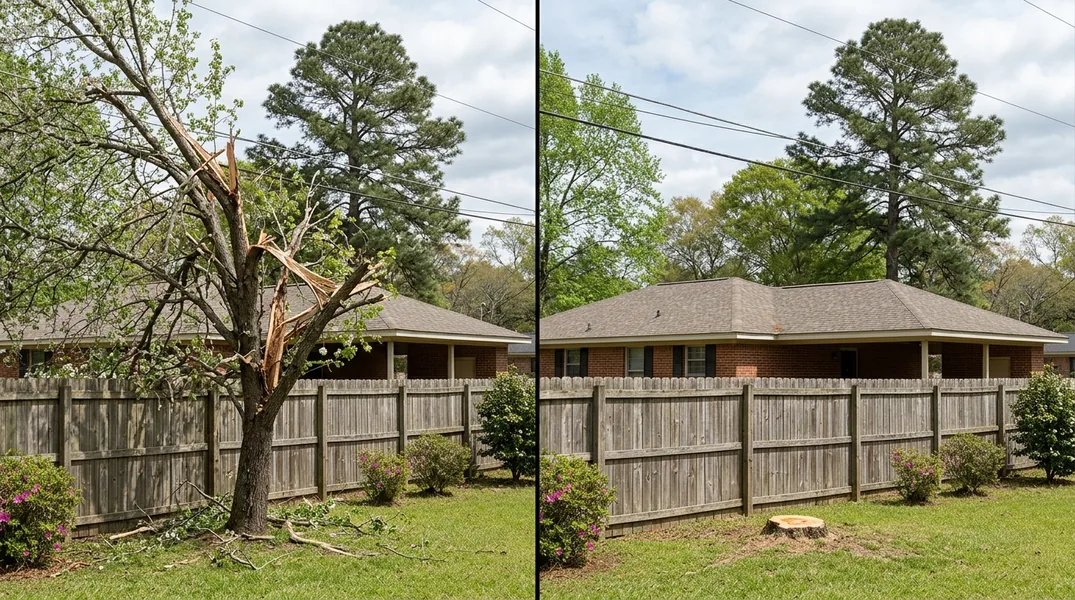
Understanding the Difference: Tree Trimming vs. Tree Removal
When you notice a tree on your property showing signs of stress, disease, or overgrowth, the first question most homeowners ask is simple: does it need to be trimmed, or does it need to come down? The answer isn't always obvious, and that's where professional expertise makes all the difference. Tree Trimming & Pruning and Tree Removal serve completely different purposes, and choosing the wrong approach can cost you time, money, and potentially compromise your property's safety.
Tree Trimming & Pruning is a maintenance procedure designed to promote tree health, improve appearance, and remove hazardous branches. When an arborist trims a tree, they're selectively removing dead, diseased, or overgrown limbs while keeping the tree alive and thriving. This service is ideal for trees that are otherwise healthy but need shape correction, clearance from structures, or removal of problematic growth. On the other hand, Tree Removal is a more drastic solution reserved for trees that are beyond saving due to disease, severe damage, structural failure, or safety concerns. Understanding which service your tree actually needs requires a careful assessment of its overall condition.
Signs Your Tree Needs Trimming, Not Removal
A healthy tree with good structural integrity is almost always worth saving through proper trimming. If your tree is still producing green leaves, showing new growth, and has no signs of internal decay, it's likely a candidate for tree pruning rather than removal. Trees in Mobile often benefit from regular trimming to maintain their shape, especially after storms or during heavy growth seasons. Common reasons to trim rather than remove include overgrown branches rubbing against your roof or power lines, lower limbs blocking your view or walkway, dead wood that poses a minor safety risk, or branches that are crossing and rubbing against each other.
Another key indicator that trimming is appropriate is if the tree's main trunk and primary branches are strong and intact. If the tree has experienced some storm damage but the core structure remains sound, strategic pruning can remove the damaged portions while preserving the tree's life. Many homeowners are surprised to learn that even trees with significant branch loss can recover beautifully with professional pruning guidance. An experienced arborist can assess the tree's vigor, growth patterns, and recovery potential to determine whether trimming will restore it to health. If you're unsure whether your tree qualifies for trimming, the best approach is to request a free estimate from a qualified professional who can evaluate its specific condition.
Red Flags That Indicate Tree Removal May Be Necessary
Certain conditions make a tree unsafe or unviable, and in these cases, Tree Removal is the responsible choice. If a tree is severely diseased with conditions like oak wilt, Dutch elm disease, or advanced root rot, trimming won't save it, and leaving it standing only spreads the disease to neighboring trees. Trees with major structural defects, such as a split trunk, severe lean, or large cavities in the trunk, pose serious safety risks that can't be corrected through pruning alone. A tree that has lost more than 50 percent of its canopy due to storm damage, disease, or pest infestation rarely recovers to its former beauty and function.
Other warning signs include trees that are growing into power lines or structures in ways that can't be safely managed through trimming, trees with extensive root damage or girdling roots that strangle the tree's nutrient supply, or trees that are simply too large or positioned too close to your home to allow safe trimming operations. Dead trees are always candidates for removal, as they become brittle and dangerous, with branches that can fall without warning. If you notice mushrooms or fungal growth at the base of the tree, significant bark damage, or sections of the trunk that are completely bare of bark, these are signs of serious internal problems that trimming cannot address. When in doubt, call Mobile Tree Service at (251) 283-5812 to have a professional arborist evaluate your tree's condition.
How a Professional Arborist Makes the Decision
An experienced arborist in Mobile doesn't make the trimming versus removal decision lightly. Professional arborists follow established industry standards and use their training to evaluate multiple factors. First, they assess the tree's overall health by examining the canopy density, leaf color and size, growth patterns, and the presence of new shoots. They inspect the trunk and major branches for signs of decay, cracks, cavities, or pest damage. They also consider the tree's location, its proximity to structures and utilities, and the risk it poses to people or property. An arborist will evaluate whether the tree is native to the region, whether it provides environmental or aesthetic value, and whether it could potentially recover with proper care.
The decision-making process also includes considering the tree's species and age. Some trees are naturally long-lived and resilient, while others are more prone to disease or structural failure. Climate and environmental stress in the Mobile area, such as hurricane damage, salt spray, or prolonged drought, all factor into the assessment. A professional arborist will also discuss your goals for your property. Do you want to preserve the tree if possible, or are you more concerned with clearing space? Are you interested in the long-term health of your landscape, or do you need immediate solutions? These conversations help the arborist recommend the best course of action. When you schedule a consultation with Mobile Tree Service, our team takes time to thoroughly evaluate your situation and explain our recommendation in clear, understandable terms.
The Benefits of Choosing Trimming When Appropriate
Opting for Tree Trimming & Pruning when your tree is still viable offers numerous advantages over removal. Mature trees provide shade that reduces your cooling costs, improve air quality, increase property value, and create habitat for wildlife. Removing a large tree means losing these benefits, and it takes many years for a newly planted tree to provide the same level of benefit. Trimming maintains these advantages while improving the tree's health and appearance. Regular pruning also reduces the risk of branch failure, improves air circulation through the canopy, and encourages strong, well-structured growth. For trees that have been neglected or damaged, professional trimming can be transformative, restoring their shape and vigor.
From a financial perspective, trimming is typically far more affordable than removal. Tree Trimming & Pruning can be performed on a regular schedule, with maintenance pruning every few years helping to prevent the serious problems that lead to removal. This preventive approach saves money in the long run and keeps your landscape looking attractive year-round. Additionally, if you do eventually need Stump Grinding or removal services, a well-maintained tree is often easier and less expensive to remove than one that has been neglected and has developed multiple structural problems.
When Removal Is the Right Choice for Your Property
While preservation is ideal, sometimes Tree Removal is genuinely the best option for your property and safety. Removing a diseased tree prevents the disease from spreading to healthy trees nearby. Removing a structurally unsound tree eliminates the risk of catastrophic failure that could damage your home, injure someone, or destroy your landscape. In some cases, removing a problematic tree opens up opportunities for your property, allowing better sight lines, more sunlight for gardens, or space for new construction or landscaping features. If a tree is growing into your roof, foundation, or septic system, removal may be the most practical long-term solution.
The removal process itself is handled professionally by experienced crews who understand how to safely fell trees, remove large pieces, and manage debris. After removal, you may want to address the stump through Stump Grinding to reclaim your yard space and prevent regrowth. Whatever you decide, the key is making an informed choice based on professional assessment rather than guesswork. If you're facing uncertainty about a tree on your property, reach out to Mobile Tree Service today at (251) 283-5812 or request a free estimate to get expert guidance tailored to your specific situation.
Looking for a professional tree service contractor in Mobile? Mobile Tree Service responds fast for all your tree service needs.
Get a Free QuoteOur services: Tree Removal · Tree Trimming & Pruning · Stump Grinding